3 December 2017
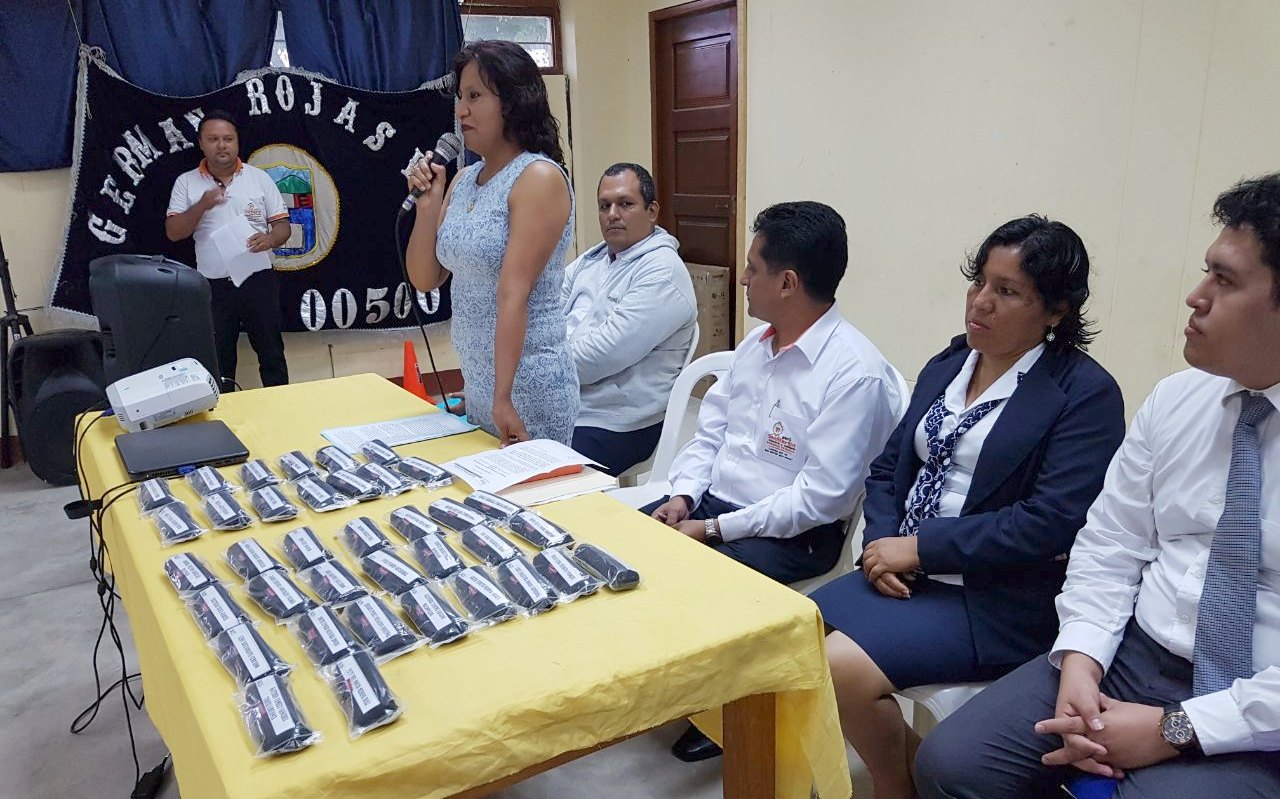
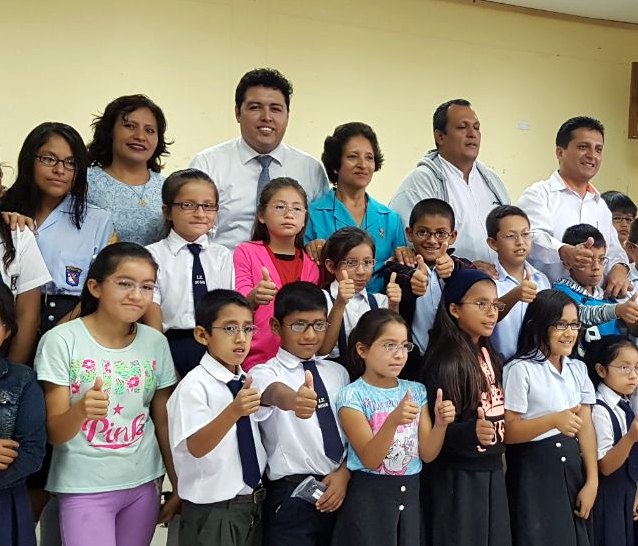
This was a busy week of travel and coordination for the courses "Helping Babies Breath" and "Helping Mothers Survive" in two cities. Our team included four American doctors and four Peruvian doctors that taught both courses in Huacho and Cajamarca.
These courses are taught each year in two cities around Peru where they have experienced high rates of infant and maternal mortality. Around 50 local doctors were trained in each of these two cities in techniques that will save lives during childbirth.
About 30 percent of babies around the world are born with breathing problems and have to be helped. Without intervention, many of these babies die. This part of the course provided hands-on training with mannequins and respirators that we donated so students of the class could teach the course to colleagues back at their remote health centers.
The weeks leading up to the training were very intense as we arranged all travel, arranged the buildings for the courses, arranged meals for everyone, etc. We had also previously shipped 124 boxes of supplies (62 boxes to each of the two training locations) so students could take the materials and mannequins with them to repeat the training.
We were the only non-doctors at the training, so we observed or served as runners during the course to get items that were needed to keep the course going.
This part of the course was new this year and taught techniques to save mothers from bleeding to death after giving birth. In one city in Peru last year, 5,000 babies were born during a 9-month period, but 90 mothers died during that same period from post-partum hemorrhages. Techniques taught during this part of the course are designed to stop the bleeding and save lives.
Huacho is located on the coast, a 3-hour drive north of Lima. We rented two vans to get all 10 of us up here for the two days of training. We walked two blocks down to the coast during a break in the training one day to see their fleet of fishing boats
This was a busy week of travel and coordination for the courses "Helping Babies Breath" and "Helping Mothers Survive" in two cities. Our team included four American doctors and four Peruvian doctors that taught both courses in Huacho and Cajamarca.
 |
| We ordered vans to haul our team the 3-hour drive to Huacho. We then drove back to Lima and flew on to Cajamarca. |
These courses are taught each year in two cities around Peru where they have experienced high rates of infant and maternal mortality. Around 50 local doctors were trained in each of these two cities in techniques that will save lives during childbirth.
Helping Babies Breath
About 30 percent of babies around the world are born with breathing problems and have to be helped. Without intervention, many of these babies die. This part of the course provided hands-on training with mannequins and respirators that we donated so students of the class could teach the course to colleagues back at their remote health centers.
 |
| We divided into groups with each of our doctors leading the discussion at each table. |
 |
| Students practiced using life-like mannequins and hand-held respirators. We filled the mannequins with water to make them feel real. |
 |
| The doctors from our team did the training - we just made sure the courses went off according to schedule. |
The weeks leading up to the training were very intense as we arranged all travel, arranged the buildings for the courses, arranged meals for everyone, etc. We had also previously shipped 124 boxes of supplies (62 boxes to each of the two training locations) so students could take the materials and mannequins with them to repeat the training.
We were the only non-doctors at the training, so we observed or served as runners during the course to get items that were needed to keep the course going.
 |
| Time is critical after a baby is born. Knowing what to do when a baby doesn't breath will make the difference in whether the baby lives or dies. |
 |
| Every student practiced using the mannequins that they will all take back to their health centers so they can teach this course to others. |
Helping Mothers Survive
This part of the course was new this year and taught techniques to save mothers from bleeding to death after giving birth. In one city in Peru last year, 5,000 babies were born during a 9-month period, but 90 mothers died during that same period from post-partum hemorrhages. Techniques taught during this part of the course are designed to stop the bleeding and save lives.
 |
| Simulators during the "Helping Mothers Survive" course included a strap-on pod complete with a baby, umbilical cord, and placenta inside. |
 |
| The simulations even included fake blood that students had to stop, along with umbilical cords that had to be tied and cut. |
The courses were taught in our chapels in both cities. It was really convenient in Huacho because our chapel was right across the street from the regional health offices. In Cajamarca, our chapel was just a few blocks away from the regional health offices.
 |
| Our chapel in Huacho where we held the training, just across the street from the Regional Health Office. |
During the training in Cajamarca at the end of the week, we got an unexpected surprise when Lily Davalos, a part-time welfare service missionary we work with in Lima, called us. She and her husband were in Cajamarca on vacation, and she was calling to see if we needed any help. They came by in time to help us with a number of tasks, including distributing the lunches to the 50 participants and the instructors. This was an unexpected surprise.
 |
| Jose and Lily Davalos showed up by surprise and helped us out in Cajamarca. Lily is a part-time service missionary from our office in Lima. |
Those that completed the courses received certificates as evidence they participated in this life-saving training.
 |
| Successful training in Huacho - students and instructors. The regional governor in Huacho even showed up for the closing ceremony to show support for this life-saving training. |
Around Huacho
Huacho is located on the coast, a 3-hour drive north of Lima. We rented two vans to get all 10 of us up here for the two days of training. We walked two blocks down to the coast during a break in the training one day to see their fleet of fishing boats
 |
| Fleet of fishing boats in the harbor at Huacho. |
Interestingly, during the training in Huacho, there was a demonstration in the street in front of the Regional Health Office (which just happened to be across the street from our chapel where the training took place). About 200 people showed up, shouting and chanting about lack of pay from the government for health workers. The strange thing is that the head of the regional health office, who was the target of the demonstration, was across the street in our chapel going through the training course. He must have been inspired to attend!
On the 3-hour drive back to Lima after the training course, we came upon an unexpected surprise: an SUV exploded in front of us on the freeway and caught on fire. The flames were so intense that no one could pass. We all sat, parked on the freeway, for a long time until the fire department arrived and put out the flames, allowing us to pass by. We finally reached our apartment in Lima after 10 p.m., got some sleep, then had to leave by noon the next day to catch a flight to Cajamarca.
Cajamarca is a beautiful city high in the Andes Mountains at 9,000 ft. Francisco Pizarro defeated the Incas in this city. Lush and green, there were fields of milk cows all around the city. The best cheese and milk in Peru comes from Cajamarca.
Many women in Cajamarca wear unusual hats that are huge. Everywhere we turned, there were women wearing these traditional hats.
Several people (that we met on the street as well as merchants) told us that prices for these handmade hats start around $125 USD and go up to about $300. For people of limited means, this is a serious commitment to own one of these hats. Like a friend told me, "You can't buy a ranch when you spent everything you own on the hat."
Women weren't the only ones with the hats. They just looked cooler than the hats the men wore.
On Saturday, we had a little free time before our flight. We took a taxi out of town to visit a burial site used by people who predated the Incas by thousands of years. These burial niches were carved into the soft volcanic rock and once held the remains of people who died long ago.
Hundreds of these burial niches line the cliff side. The Incas respected this burial site, but the Spaniards had no problem with removing the remains of the dead in search of gold and silver, which were often buried with the dead. After searching through the bodies, the Spaniards just threw out what was left (mostly bones), so there are no bodies left in the niches.
Virtually everyone in Peru has Spanish blood, but the Spaniards are not well regarded here for what they did to the native societies while in search of riches. The fact they tossed away the bodies buried here at the Ventanillas is just one more evidence of how Spaniards disregarded civilizations that had been here for millennia.
Cajamarca was an interesting city, far less touristy than most other Peruvian cities. It is off the beaten tourist path but has a special charm similar to Cusco and Arequipa. We will remember fondly the people and sites here.
And so we returned home late Saturday night. We spent two nights in Lima and then leave tomorrow for the jungles of Pucallpa on a vision project. We pray for the strength to keep up this pace of travel, which sometimes wears heavy on us. Nevertheless, we came on this mission to serve, and we certainly get plenty of opportunities for that.
 |
| Demonstration in front of the regional health office. Unbeknownst to the demonstrators was that the health office director was across the street in our chapel going through the training. It is a good thing they didn't know that or they might have stormed our chapel. |
On the 3-hour drive back to Lima after the training course, we came upon an unexpected surprise: an SUV exploded in front of us on the freeway and caught on fire. The flames were so intense that no one could pass. We all sat, parked on the freeway, for a long time until the fire department arrived and put out the flames, allowing us to pass by. We finally reached our apartment in Lima after 10 p.m., got some sleep, then had to leave by noon the next day to catch a flight to Cajamarca.
 |
| The burning vehicle that exploded in front of us. We never learned if anyone was killed or injured. We waited in a long line of traffic on the freeway until firefighters extinguished the flames and we were allowed to continue. |
Into Cajamarca
Cajamarca is a beautiful city high in the Andes Mountains at 9,000 ft. Francisco Pizarro defeated the Incas in this city. Lush and green, there were fields of milk cows all around the city. The best cheese and milk in Peru comes from Cajamarca.
 |
| Flying over Cajamarca - a lush and green city high in the Andes Mountains. |
 |
| Architecture of the cathedrals and other buildings in Cajamarca is very Spanish. |
 |
| View down the walkway leading to the town center, the Plaza de Armas. |
 |
| Decorative stairs leading up to the view point and church of Cerro Santa Polonia. |
Hats in Cajamarca
Many women in Cajamarca wear unusual hats that are huge. Everywhere we turned, there were women wearing these traditional hats.
 |
| Typical hand-woven straw hat worn by many women in Cajamarca. |
 |
| Selling a few tiny apples on the sidewalk. You don't need an umbrella when you wear these hats. |
 |
| Gigantic hat - you've got to be careful in a windstorm with this thing. Note the store with the bars. We have seen these in a few places in Peru. You go up to the bars, point to what you want, pay through the bars, and then you get your goods. Some places do this to prevent shoplifting and robbery. |
 |
| Grandmother on the bus we rode. |
Several people (that we met on the street as well as merchants) told us that prices for these handmade hats start around $125 USD and go up to about $300. For people of limited means, this is a serious commitment to own one of these hats. Like a friend told me, "You can't buy a ranch when you spent everything you own on the hat."
 |
| Contrast of cultures - woman in traditional outfit begging for a handout from a man on his cell phone. |
 |
| On her way to the market to sell herbs from her garden. |
 |
| Taking a break from handicrafts to send a text message on her cell phone. |
 |
| On a cold day in Cajamarca, it is best to bundle up. However, notice that this woman is barefoot. The skin on her feet must be like leather. |
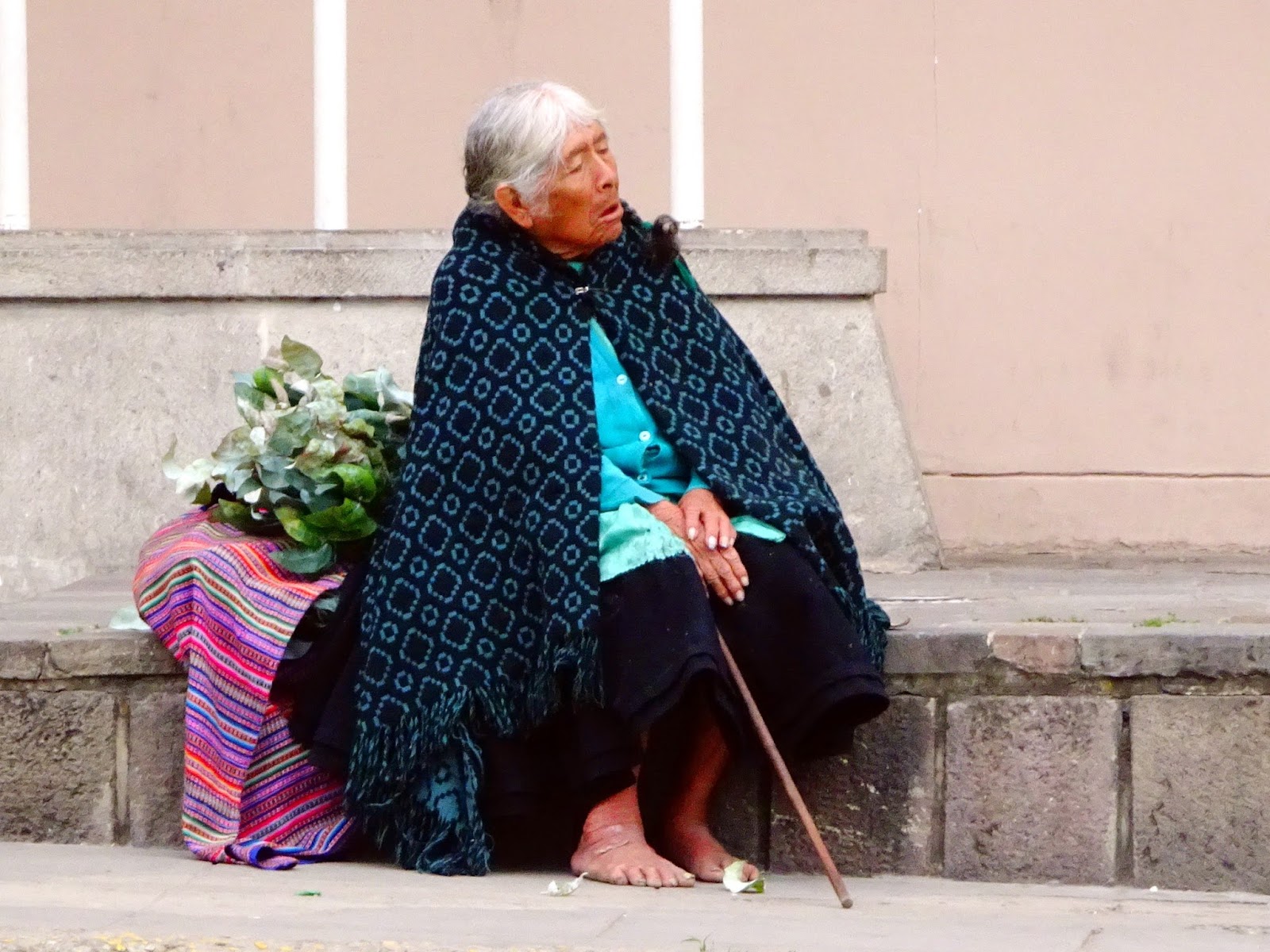 |
| This was a very poor woman asking for alms in front of our hotel. She was so poor that she had no hat and no shoes. |
 |
| These are more modern hats that are popular in regions outside of Cajamarca. These women were just visiting Cajamarca because they were the only ones we saw wearing these hats. |
Women weren't the only ones with the hats. They just looked cooler than the hats the men wore.
 |
| This guy told me he typically gets about 3 years of use out of his hats before they get so dirty and beat up it is time to get a new one. |
Ventanillas de Otuzco
On Saturday, we had a little free time before our flight. We took a taxi out of town to visit a burial site used by people who predated the Incas by thousands of years. These burial niches were carved into the soft volcanic rock and once held the remains of people who died long ago.
 |
| Ventanillas, which means 'little windows' in Spanish, held the remains of hundreds of deceased high-ranking people who died up to 3,500 years ago. |
Hundreds of these burial niches line the cliff side. The Incas respected this burial site, but the Spaniards had no problem with removing the remains of the dead in search of gold and silver, which were often buried with the dead. After searching through the bodies, the Spaniards just threw out what was left (mostly bones), so there are no bodies left in the niches.
 |
| All that is left at this burial site are hundreds of empty niches which once held the bodies of the dead. |
Virtually everyone in Peru has Spanish blood, but the Spaniards are not well regarded here for what they did to the native societies while in search of riches. The fact they tossed away the bodies buried here at the Ventanillas is just one more evidence of how Spaniards disregarded civilizations that had been here for millennia.
Farewell to Cajamarca
Cajamarca was an interesting city, far less touristy than most other Peruvian cities. It is off the beaten tourist path but has a special charm similar to Cusco and Arequipa. We will remember fondly the people and sites here.
 |
| Cathedral bells in Cajamarca |
And so we returned home late Saturday night. We spent two nights in Lima and then leave tomorrow for the jungles of Pucallpa on a vision project. We pray for the strength to keep up this pace of travel, which sometimes wears heavy on us. Nevertheless, we came on this mission to serve, and we certainly get plenty of opportunities for that.