Kissing the Clouds in Huancavelica

11 March 2018

Our journey this week took us high in the Andes Mountains into the region of Huancavelica, a very remote part of the country with tremendous needs. This was an investigative trip to assess needs and develop three projects to help the poor.

Huancavelica - an isolated and remote mountainous region high in the Andes Mountains. I took this shot as we flew over the region. Note the villages in the tops of the mountains.

The Huancavelica Region is so isolated, they don't even have an airport. We had to fly into Ayacucho and drive into the region on twisty, winding roads that defy description.

High-Altitude Adventure


Our government partners picked us up in Ayacucho for our journey into Huancavelica (no airports in the region). The 4-wheel-drive pickups that the government sent to get us were critical to getting into the remote villages we were to visit. We spent most of this trip traveling at high altitude above 14,000 ft elevation.

We have never been on more twisty, winding, narrow roads. Notice how this road is only one lane wide, just like most in this region.

Many narrow roads ran along steep cliffs with no guard rails - we said many silent prayers, especially after the rain started and things got slick.

We left the paved roads at certain points and traveled for hours along stretches of mud-bog roads through boulder fields trying to reach some of the most remote villages.

A few hours of driving in the mud was a part of the adventure we had not planned on.

At some points, the mud got so deep we had to cut cross country while trying to avoid the boulders.

And just when we thought we couldn't get any further from civilization, we passed an old Andean woman carrying a load on her back as she walked back to her village.

Andean woman carrying a load in her shawl along the muddy path in the middle of nowhere.

Health Centers in the Andes


There are no hospitals in this region except in the capital city of Huancavelica. Except for cases of extreme emergencies, everyone gets treated in remote health centers (this includes giving birth). If there is a problem pregnancy and if the mother is not sent the the hospital ahead of time, the mother and baby often die en route (since it is about a 5-hour drive on awful roads from many remote locations).

Diagnostic equipment, like ultra-sound devices and fetal heart monitors, are life-saving devices that most of these remote health centers do not have. We visited a few of these health centers, and we will now try to help provide these diagnostic tools to reduce maternal and infant mortality.

Doctor and assistants in the delivery room of the Julcamarca Health Center. Note the lone space heater in this delivery room, the only heat in this hospital in a region known for its year-round cold. Thank goodness there is a baby incubator.

The Health Center in Julcamarca lost a mother and her triplets last year because they didn't have the ultrasound device that could have detected the multiple births. Our project will seek to turn that situation around.

Mothers from villages around Chachapunco showed up at their health center to show support for our project when they heard we were coming.  (Note the dress that almost every woman in this region wears: the traditional hat and garb with up to 12 layers of petticoats.)

Residents from the villages around Chachapunco showed up to show support for our proposed health project.

We showed up about an hour late (due to the roads), and we came wearing coats, but the local women seemed content in their traditional multiple layers of sweaters. This is another world up here in the Peruvian highlands. 

Soup Kitchens (Commedores Populares)


Many poor people in Huancavelica depend on government-assisted soup kitchens for their one meal of the day. They pay $0.50 for a lunch that is the only sustenance many of them get.

The region asked for help with their soup kitchens in terms of pots, plates, and blenders. We dropped by one of them to verify the need.

Local officials and the soup kitchen presidents showing us their humble little adobe-walled soup kitchen in Julcamarca.

They cook all their meals for the community on firewood inside the soup kitchen.

The back wall of the soup kitchen is actually the stone hillside - it made the place feel like a cave.
.
This soup kitchen, led by their association presidency shown here, is one of 125 soup kitchens that we will be helping.

School Projects


We were asked if we could help with school furnishings that are in bad shape at many schools in the region. We visited a few and saw the sad state of the desks.

It's hard to study at tables with only 3 legs or at desks that are this damaged.

Kids in the school at Illapata (above 14,000 ft elevation) greeted in their makeshift classroom in a community center (note how the kids wear coats and boots year round at this altitude).

Cute bunch of kids at one especially cold mountain school. They wear boots because of the mud and hats because of the extreme sunshine that damages their skin.

The kids stood up and showed us that the only bench they all shared at the school was two wooden planks.
.
The parents were so pleased to have visitors (no one ever comes to this remote place) that they fed us cooked potatoes, alpaca meat, and herb tea - basic food that they consume everyday. Sandy and our partner Glenis Monge from the regional health department are shown here eating this simple meal with the children.

Local Partners - Key to Project Success


We never work on our humanitarian projects alone - we always work with partners who can sustain the project after it is done. In Huancavelica, we have partnered with the regional government, health department, education department, and social development department. We can provide donations of goods, but their part of these projects includes covering shipping costs, maintaining inventory and maintenance control, and overseeing these items to make sure they are accounted for and maintained into the future.

Partners in Huancavelica from regional government and departments of education, health, and social development

Glenis Monge (province of Angaraes health department) and Alex Principe (our area welfare specialist) as we overlook the city of Lircay, the focus of our projects.

Devastation left by the Shining Path Guerrillas


Mountain regions were hit especially hard by the Shining Path guerrillas (Sendero Luminoso) that caused havoc here in the 1980s and 1990s. Twenty years have now passed since the communist uprising was squashed (which left over 70,000 dead). But you can still see the aftermath and suffering this uprising caused.

This school in Illapata was burned by the Shining Path. The rebels took men from the village who opposed them, locked them into the school, and set it ablaze. Twenty years later, they are finally building a new school (shown in the background). 

Illapata is the village where the terrorists attacked and killed the men. The old woman in front is an 80-year-old widow who lost her husband in the attack. After all these years, people are only now starting to return to the mountains where there was so much violence.

We are glad that we can be part of rebuilding parts of Peru that saw so much sadness during the days when terrorists ruled this region.

Living at Altitude


Life at 14,000 ft elevation is hard in these remote places. Electricity and running water are usually not available. The locals build their own houses out of adobe or large boulders, and the roofs are either corrugated metal or pampas grass they gather from their fields. Temperatures are cold year-round. Most people make their meager income raising alpaca or farming potatoes. This is a hard life that they have led for generations.

Homemade boulder house with grass roof - a rough way to live in freezing conditions.
.
Herds of Alpaca were everywhere - there are probably more alpacas than people in Huancavelica.

You are considered rich if you can afford a corrugated metal roof rather than a grass roof.

The sun came out on our last day in the mountains - I think the herds of alpaca were oblivious to the sunshine. They just kept foraging whether it was sunny or not.

Life in these remote villages continues as it has for centuries.

Around Huancavelica


We spent the morning of our last day in the city of Huancavelica, capital of the region. Often described as the Switzerland of Peru, the city is ringed by spectacular mountains.

Huancavelica - The 'Switzerland' of Peru.

Huancavelica's main cathedral on the plaza.
.
Delivery truck (bike ?) beneath the peaks surrounding Huancavelica.

.
Ancient church in Huancavelica (note the plants growing in the roof).

One final shot shows a scene from the city of Ayacucho (where we flew to get to Huancavelica). This is the Arch of Triumph to celebrate the defeat of the Spanish forces in 1824 at the battle of Ayacucho that led to Peru's independence.

Ayacucho's Arch of Triumph - a reminder of the battle that led to Peru's independence.


And so our productive (but exhausting) journey to Huancavelica came to an end, and now the real work begins in developing the projects and trying to complete them before we go home.

Surgical Instruments to Save Lives, Escape to Miraflores, and Banana Land

4 March 2018

The poorest of the poor in Peru can only get medical treatment in government hospitals. In areas outside of Lima, government hospitals often lack basic surgical instruments, so the poor are referred to hospitals in Lima. Unfortunately, the poor can seldom afford to travel to Lima, so they go untreated for a host of conditions.That is where we often are asked to assist.

Surgery Aid in Arequipa


The Regional Government Hospital of Arequipa sees around 20 patients per month who have tumors, growths, and cancers in their throats. The best treatment involves operating through the patient's open mouth (called microlaryngeal surgery). Unfortunately, the hospital in Arequipa has none of the equipment to do that surgery, so the regional government made an appeal for aid from us.

Photo of Microlaryngeal Surgery using Surgical Microscope

The request is for the surgical microscope that doctors look through as they operate down the throats of patients. The other surgical instruments (scissors, forceps, and other tools) are frightening because they are so long. But the outcomes of these surgeries (because they are so non-invasive) are good.
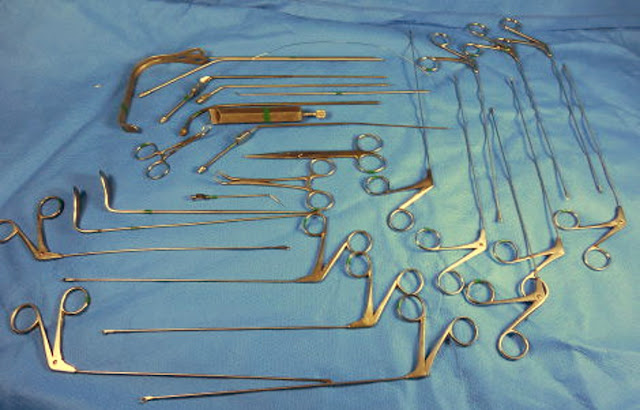
Extra-long scissors and forceps used for the surgeries (along with the surgical microscope)

Currently, when the hospital needs to perform a microlaryngeal surgery, they have to rent the equipment. The cost to rent is $500 per surgery, which the patient must pay. Since the patients are dirt poor, they simply don't have the money to pay for the rental. They then get the surgery the old-school way, which involves going in through the throat and cutting open the larynx, and that greatly increases the chance of complications.
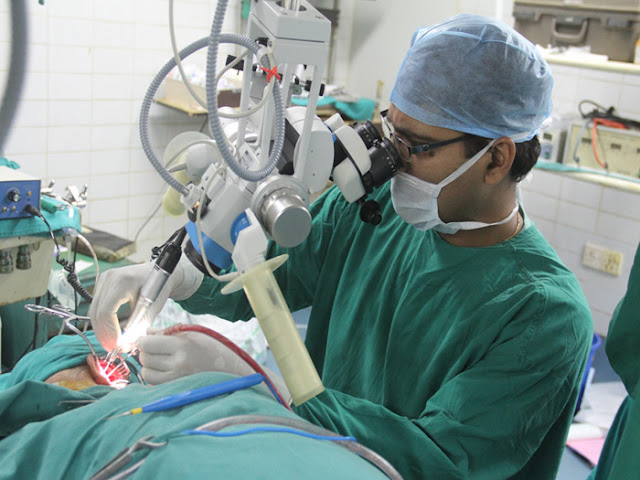
Outcome from the microlaryngeal surgeries are much better because no cutting is required on the outside of the patient.

We take this request by the government for help and turn it into a project which our Area Leadership will review. We hope to have this project approved this week and then move forward with obtaining the equipment and making the donation. We estimate that thousands of poor patients will benefit over the coming years.

This one project is part of more than a half dozen that are currently in the review/approval cycle. With some luck, we may be able to finish all of these pending projects before our mission ends in 4-1/2 months.

Escape to Miraflores


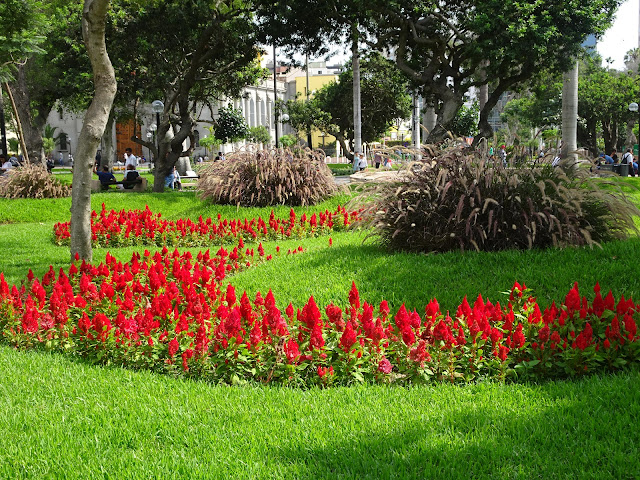
On our day off, our favorite escape is to the suburb of Miraflores about 10 miles from here. Miraflores means "look at the flowers", and there is always something in bloom there.
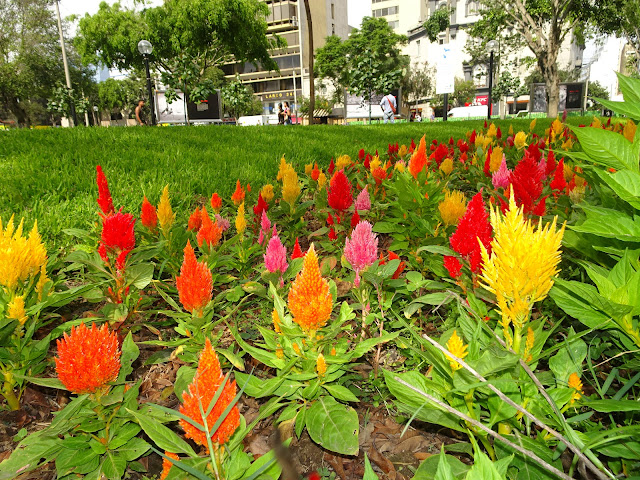
A rainbow of color in bloom at Park Kennedy in Miraflores

Surrounded on all sides by city, the parks in Miraflores offer an escape from the hustle and bustle of the city.

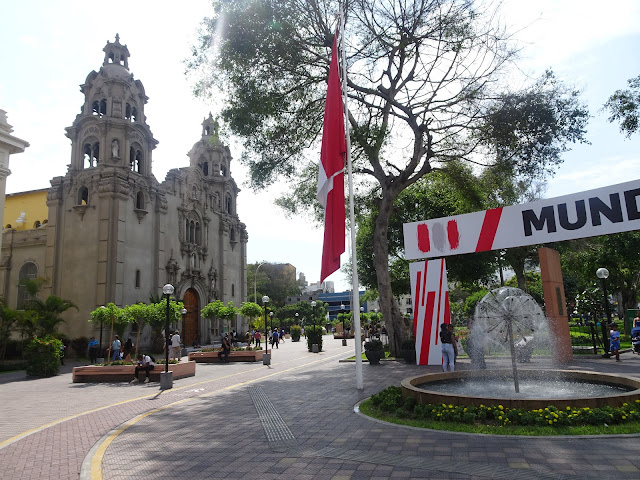
The cathedral in Park Kennedy and entrance to the park.

We often rent bikes when we go to Miraflores, and we bike about 9 miles on bike paths that wind through the city and along the coastal cliffs. Biking is a joy in Miraflores whereas biking anywhere else in Lima would be suicide.
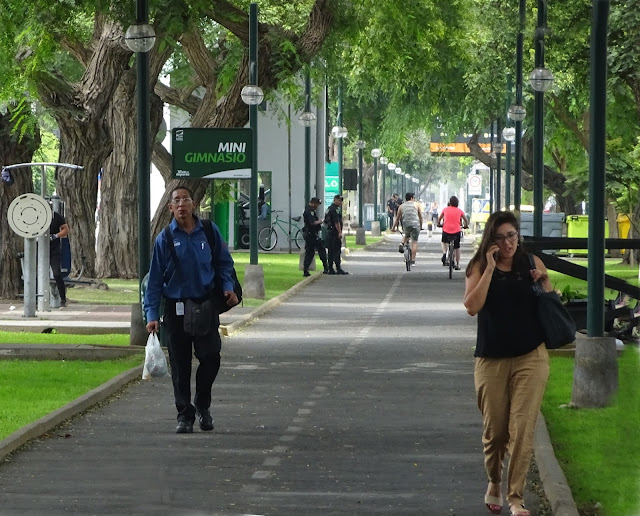
Tunnel of Trees - City streets on both sides of the bike path and parks through the heart of the city.

Bike rack at Park Kennedy in Miraflores - a popular destination point for Lima bikers.

Land of Bananas


We have seen more bananas in Peru than we have seen anywhere else in the world. Bananas grow throughout the jungle and in many coastal regions. We've seen boatloads unloaded at jungle ports on the Amazon and Ucayali Rivers. They are a part of the daily diet in many areas where potatoes don't easily grow. We eat them instead of potato chips, french fries, or baked potatoes in many areas around the country.
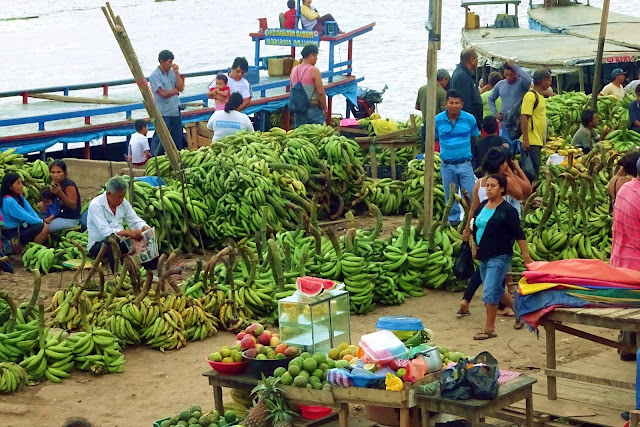
Bananas, fresh from the jungle, being unloaded in the jungle port city of Pucallpa (the day after Christmas, no less).

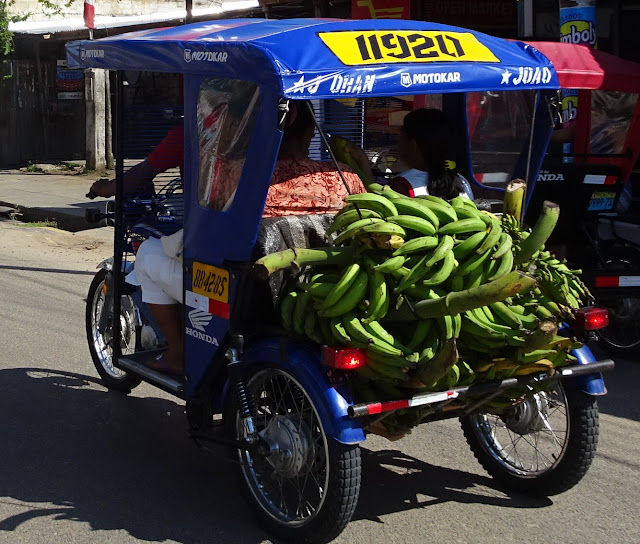
Family bringing home a bunch of bananas on a motor-taxis in the high-jungle city of Tarapoto.


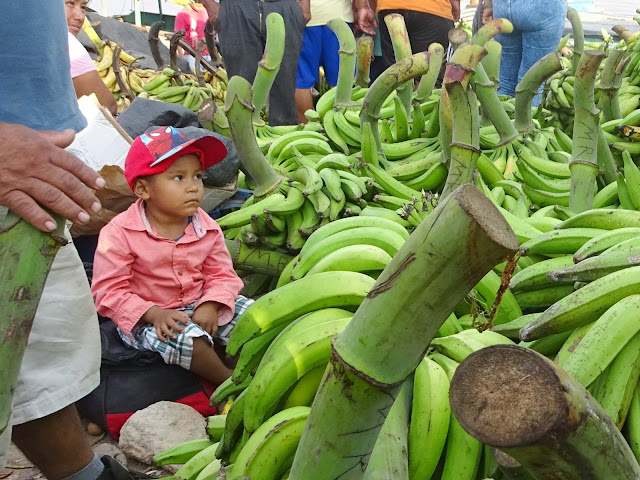
My favorite shot of a little boy waiting patiently for his parents to finish their bargaining in the Pucallpa banana market.

Grocery stores around Peru stock an incredible assortment of bananas. Here is a shot from the store in our neighborhood with probably a dozen varieties. These range from giant cooking bananas to tiny finger-size sweet bananas. Prices can be incredibly cheap. For example, the bananas shown closest to the camera sell for S/ 0.49 Peruvian Soles per kilogram - which works out to about $0.08 USD per pound.

Lots of varieties to choose from - some are for eating raw, others are cooked like potatoes.

Bananas substitute for potatoes in many areas around Peru. It seemed strange at first, but now we love them whenever we are in the jungle. These bananas are plantains, which are not sweet. Due to their high starch content, they taste more like potatoes.
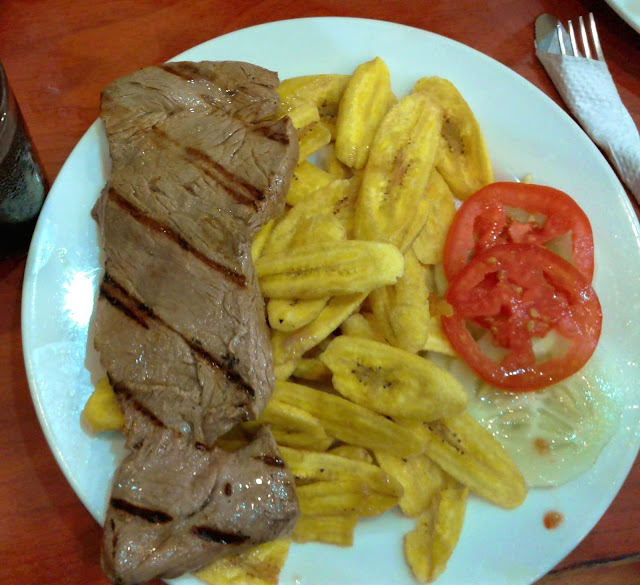
Tired of steak and potatoes? Try steak and bananas in the jungle city of Iquitos. 

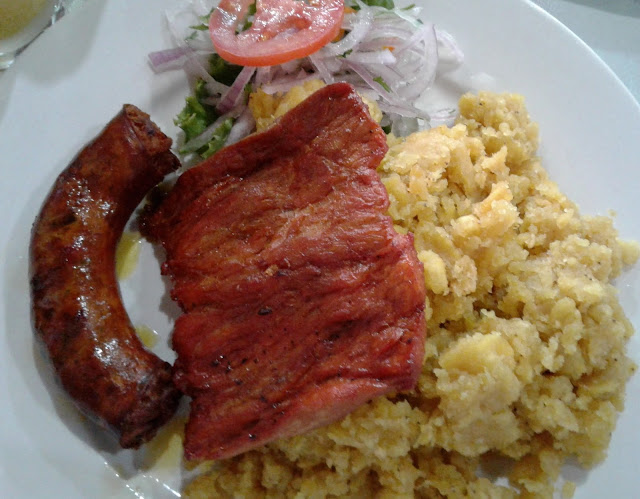
In the jungle city of Moyobamba, we ordered this smoked meat and sausage dish that came with fried bananas. It reminded us of hash browns. Yummy!

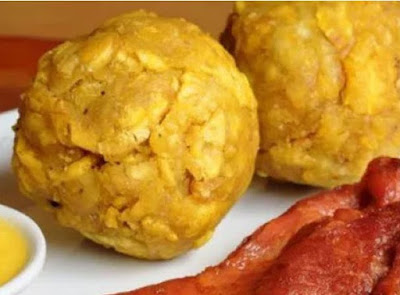
Another favorite we always order when we are in jungle cities are the round, fried banana balls they call 'tacacho'. The plantain bananas they use are not sweet, so they taste like potatoes.

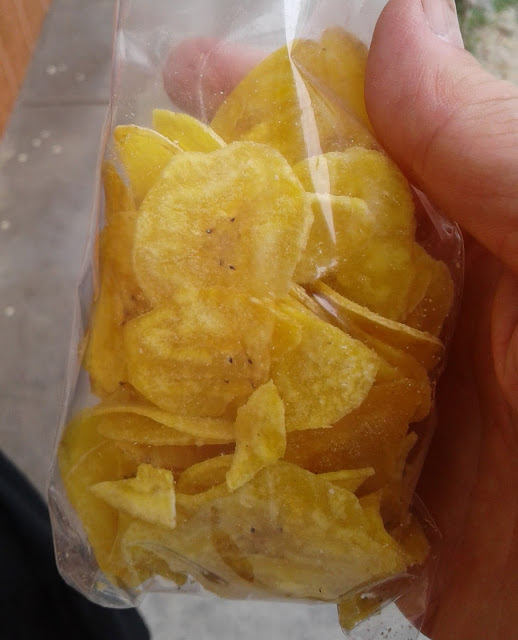
Better than potato chips, we can buy these banana chips (called chifles) all over Peru. They are not sweet like in the USA, but they are salty and are an excellent snack that reminds us of the best potato chips we have ever eaten. On a trip back from the northern coast, we brought back 10 bags with us (we bought them from the guy who owns the factory in Tumbes where they were made, and they were superb).

Finally, we are all familiar with Mexican tamales cooked in corn husks, but here in Peru, they cook their tamales in banana leaves. They tie them up with string or plant stems to keep them together until they are cooked.
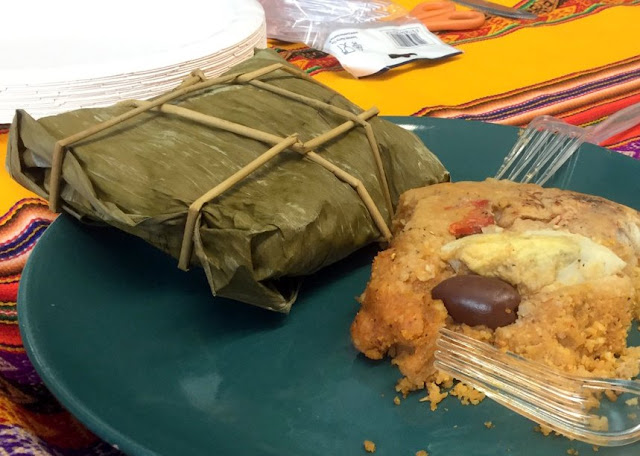
Peruvian tamales - cooked in banana leaves.

The many varieties and uses of bananas here in Peru has been an interesting part of our adventure.

Wedding - Peruvian Style


We learned once again this week that Peruvian time and American time are two very different things.

We were invited to the wedding and reception of the daughter of Lily Davalos, who works with us in the Area Office as a volunteer part-time service missionary. We attended the temple wedding in the afternoon, then traveled south to their suburb in the evening for the wedding reception. The invitation said the reception started at 7 p.m., so we arrived at 7:30 p.m.

We thought (by North American standards) that things would be well underway when we arrived, but that was not the case. The wedding party (bride, groom, and attendants) finally showed up 9:15 p.m. No one at the reception seemed surprised - this is normal in Peru.
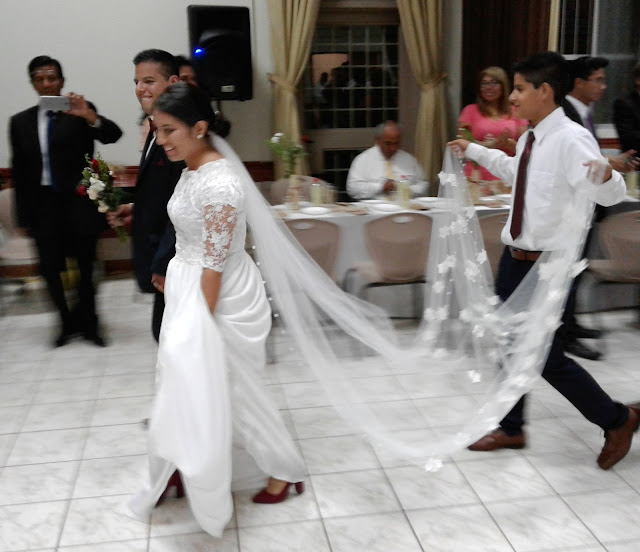
The wedding party finally arrives (only 2 hours and 15 minutes after the reception was supposed to start).

Once the bride and groom arrived, the party finally got under way. Unfortunately, we left a few minutes later to get out of this somewhat-tough neighborhood before it got too late.

Lily and Jose Davalos, parents of the bride.

Part of being in a foreign land is realizing cultural norms can be very different from your own. By North American standards, starting a wedding reception 2 hours late would be unheard of. In South American, it is expected.

(Note that we were the only guests to show up so early - everyone must have thought we were crazy.)

Peruvian Gas Stations


Gas ranges in price from $4 to $5 per gallon in Peru, depending on the octane. The interesting thing for us is that there are no self-service gas stations in Peru - everything is full service. You pull up to the pump, a uniformed attendant asks what you want, and then fills your tank and takes your money.

It has been almost 40 years in the USA since I saw a full-service gas station, but it is the norm here.
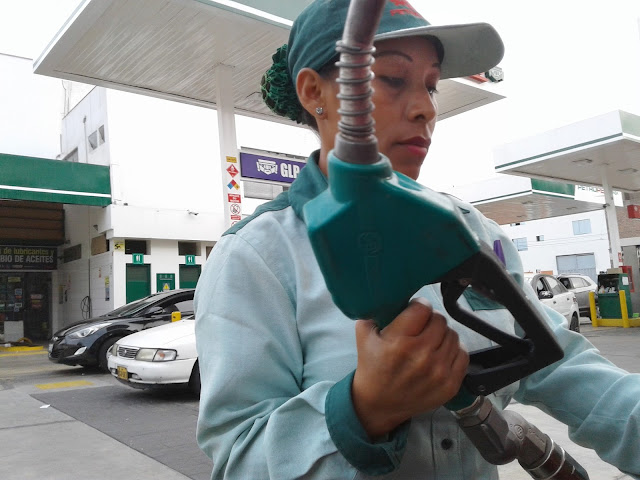
Every gas station in Peru is full service. The attendants wear uniforms like in the USA back in the 1950s.

Tickets to the Show


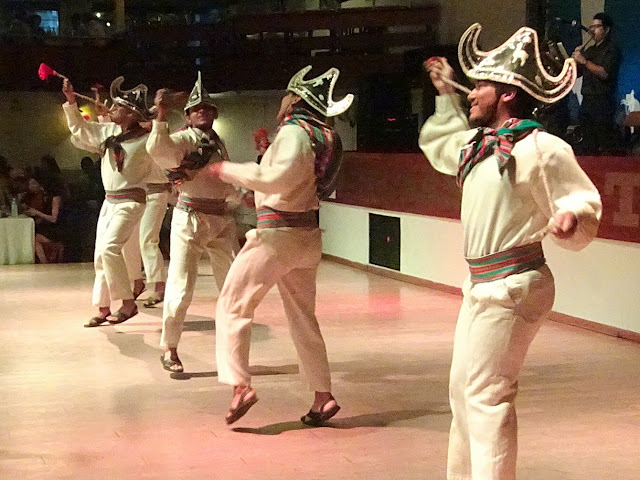
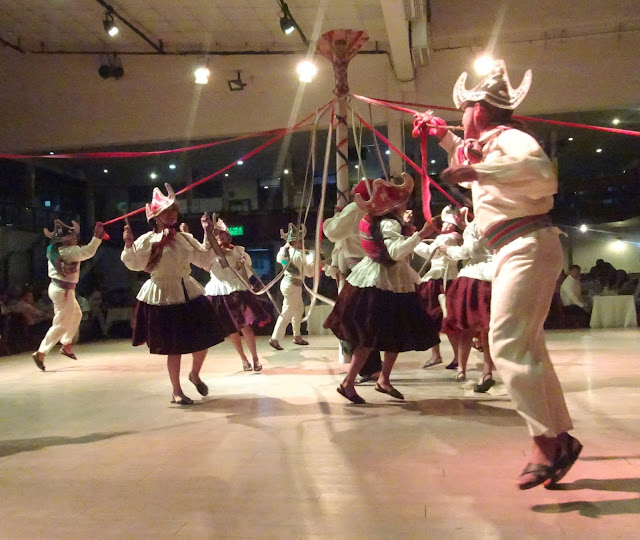
Cultural events take place all over Lima almost every day of the week. On Wednesday, one of our coworkers in the Area Office gave us extra tickets to one of these dinner shows at a place called Las Brisas del Titicaca (Breezes of Lake Titicaca).

Live music and dance - this dance celebrated high-society Lima culture.

Celebrating the many regional cultures in Peru.

Tying the ribbon around the pole is celebrated in many regions of Peru.

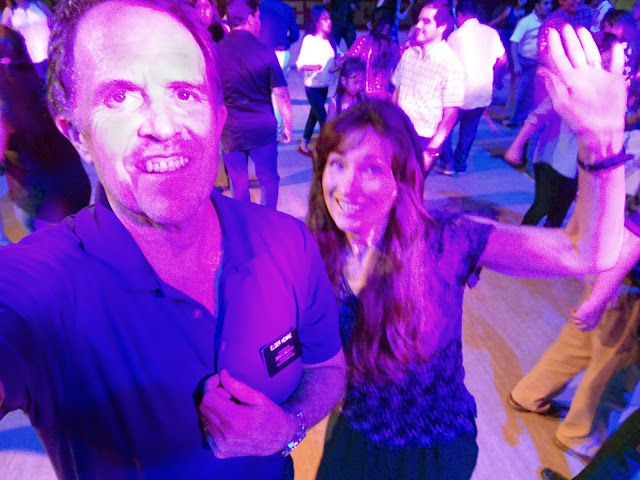
The live band was top notch, playing both traditional Andean musical instruments and more modern instruments. Interspersed with the dance show was the chance for everyone to get out on the dance floor.
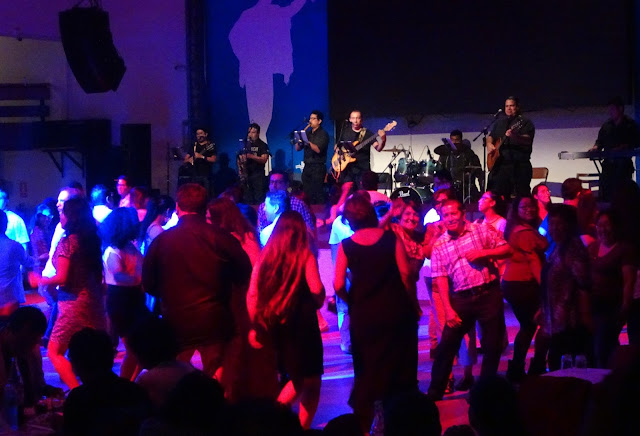
Joining in the fun with the live music.

We even got our chance to hit the floor.


And so this week, we are on the road as we head deep into the Andes Mountains to develop humanitarian projects in an especially poor region. We hope to survive the 12,000-ft altitude and the altitude sickness we sometimes encounter.